Dragonflies and damselflies are part of the order Odonata (odonates). Insects of the order Odonata are divided in two suborders: Epiprocta (dragonflies) and Zygoptera (damselflies). Learn how to tell the difference between dragonflies and damselfliesflies below.
Dragonflies
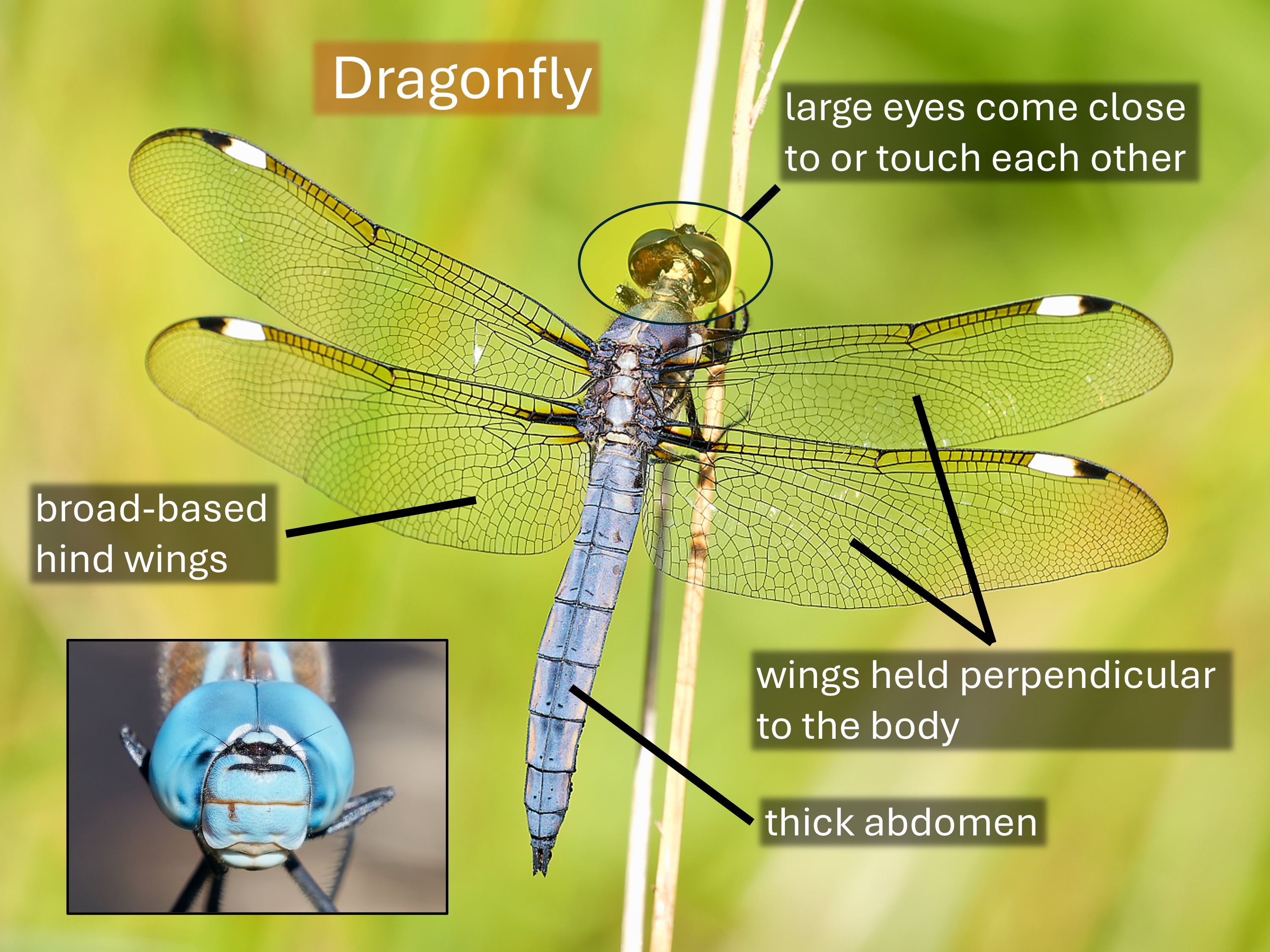
Epiprocta are commonly referred to as dragonflies. Most species of the suborder Epiprocta belong to the infraorder Anisoptera, which includes the darners, clubtails, spiketails, and skimmers. Anisoptera are characterized by the following:
- The eyes are large and come close to or touch each other.
- The wings are broad at the base and perpendicular to the body.
- The abdomen is thick.
- Damselflies are often larger and have faster flight then damselflies.
Damselflies
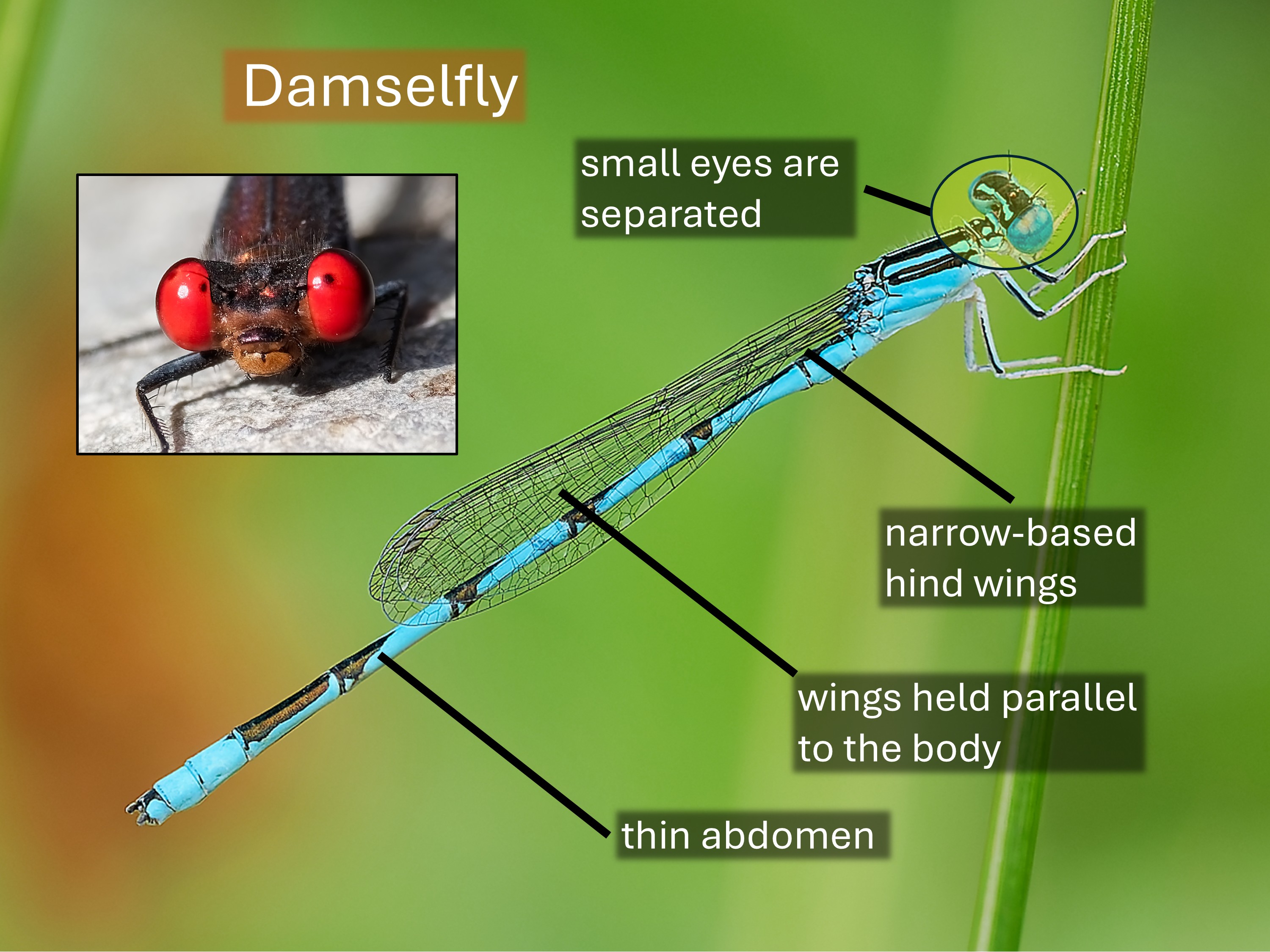
Zygoptera are commonly referred to as damselflies. These include the broad-winged damsels, spreadwings, pond damsels (American bluets, forktails, dancers, etc.), and shadowdamsels. They can generally be recognized by the following:
- The eyes are smaller and on separate sides of the head.
- The wings are narrow at the base and held parallel to the body.
- The abdomen is thin.
- Damselflies are often smaller and have weaker flight then dragonflies.
Identification and Coloration
Within each suborder of odonates, identification often relies on examination of the coloration of various body parts. As illustrated by photos on this site, coloration within a species can, however, vary considerably. Factors influencing coloration include age, sex, reproductive status, and temperature.
In addition, mature females of some damselfly species come in two forms: an andromorph (male-like) and a less colorful heteromorph forms. Consequently identification, particularly of damselflies, cannot in many cases rely exclusively on coloration, but requires examination also of structural features, such as the shape and size of terminal appendages.